Sooooo Brenna of Literary Musings posted this yesterday and, as you may have noticed, I'm nothing if not a lover of making lists and things. This one is your favourite books that start with each letter of the alphabet, and I'm totally into it. So here I go!
A- Angels in America- Tony Kushner
B- Bag of Bones- Stephen King
C- The Curious Incident of the Dog in the Nighttime- Mark Haddon
D- The Diving Bell and the Butterfly- Jean Dominique Bauby
E- East of Eden- John Steinbeck
F- Flowers for Algernon- Daniel Keyes
G- Gone With The Wind- Margaret Mitchell
H- Harry Potter (and the various things)- J K Rowling
I- I Capture the Castle- Dodie Smith
J- Jane Eyre- Charlotte Bronte
K- The Kite Runner- Khaled Hosseini
L- Little Women- Louisa May Alcott
M- Memoirs of a Geisha- Arthur Golden
N- Norwegian Wood- Haruki Murakami
O- One Flew Over The Cuckoo's Nest- Ken Kesey
P- Pride and Prejudice- Jane Austen
Q- 1Q84- Haruki Murakami (come on, let me have that one? Please?)
R- Rebecca- Daphne Du Maurier
S- The Secret History- Donna Tartt
T- To Kill A Mockingbird- Harper Lee
U- The Unbearable Lightness of Being- Milan Kundera
V- The Valley of the Dolls- Jacqueline Susann
W- Wuthering Heights- Emily Bronte
X- MiddleseX- Jeffrey Eugenides
Y- The Year of the Flood- Margaret Atwood (let's pretend I've read it!)
Z- The Zoo Story- Edward Albee
So, yeah! I'll probably be racked with regret for hours after I've posted this and thinking 'WHY DIDN'T I PUT THE GRAPES OF WRATH INSTEAD OF GONE WITH THE WIND?!' but, you know, these are the best that I can think of as of right now. Deal with it.
In other news that interests me (and probably no one else) this is my 365th post which, as I'm sure you're aware, means that on this exact day, there are enough posts on here for you to read one a day for a whole (regular) year. Which also means that you'll definitely want to print off every post and read one a day for a year so your life is fulfilled. Or maybe... just checking back here every so often where there might actually be new content? Either way is fine with me, just, you know, whatever you want...
Thursday, 12 April 2012
Wednesday, 11 April 2012
Devouring Books: 1Q84 by Haruki Murakami
There was a certain point last year where it felt like everyone was reading 1Q84. At that time I was kind of scared of Murakami, and so I generally just ignored things and pretended that I wasn't missing out on some kind of massive book phenomenon. But I kind of was, or at least I was missing out on something that was like a phenomenon for me. After I read (and was enthralled by) Norwegian Wood in January, it was just a matter of deciding which Murakami to read next, to figure out if Norwegian Wood was just some kind of fluke, or if, basically, I'm in love with Murakami.
Guess what? I'm kind of in love with Murakami. Here's something that's weird, though. It's been a few days since I've read 1Q84, and I've finally allowed myself to read some reviews and things, and I've found myself nodding at quite a few criticisms of it, and even coming up with a few of my own. This isn't necessarily weird in itself (believe it or not, I have criticised books before in my life), but while I was reading 1Q84, to me it was flawless. I was so unbelievably enthralled by it, and every second I wasn't reading it, I wished I was. Ok, that might be a slight exaggeration, but more or less? I just wanted to figure out what on earth was going on, and for the two main characters to get their shit together and find each other, even though I knew that event would most likely mean the end of the book.
I guess what I'm getting at here is the difference between actually being engaged with a book to the extent that it becomes the whole world for a little while, and then actually thinking about that book critically and taking the opinions and ideas of others into account. This isn't something that normally happens to me- I'm usually criticising as I go along, and I don't just mean being cruel about it, but just generally picking out certain features and thinking about whether I like them or not and all shit like that. With 1Q84 though? I was so caught up with the story, that I could barely remember my own name, let alone think about how it represented women, or just how cringeworthy some of the sex stuff was (now that I've thought about it? There should have maybe been a bit of cringing). About the only thoughts that came from my brain were 'mmmm, that sounds tasty' after Murakami described practically every meal every character made (and I literally want to eat them ALL) and any kind of criticism just wasn't there- it was like I forgot everything I knew, and all there was was me and 1Q84.
So, here's what I'm saying about this book (or rather, these books- for no discernible reason, the British publishers released books one and two together, and then released book three a week later- under the pretext that this is what happened in Japan, except that there was a year between those releases, and it doesn't really seem worth it for the sake of a week, other than to make people buy two separate books...). It's not perfect, and I can't pretend that it is, having now thought about it and identified quite a few flaws and things that I think could have been better in it. But. As a reading experience, it's probably one of the best I've ever had, and the thought of just how good reading it was far outweighs the slightly negative experience of realising it maybe wasn't completely perfect. Because the reading, for me? Completely perfect.
Did you notice how I literally told you nothing about the story? That was pretty much intentional- I knew basically nothing about the story when I started it, and that helped with its awesomeness since I literally had no idea what was going to happen next, and sometimes what was going on at all. In a good way! This was essentially a completely self-centred review (is there any other kind?!) because I have no idea if 1Q84 will blow your mind the way mine was. But I hope it does, or if not that you get to have this kind of experience some time, with some book. Because it was pretty bloody great.
Guess what? I'm kind of in love with Murakami. Here's something that's weird, though. It's been a few days since I've read 1Q84, and I've finally allowed myself to read some reviews and things, and I've found myself nodding at quite a few criticisms of it, and even coming up with a few of my own. This isn't necessarily weird in itself (believe it or not, I have criticised books before in my life), but while I was reading 1Q84, to me it was flawless. I was so unbelievably enthralled by it, and every second I wasn't reading it, I wished I was. Ok, that might be a slight exaggeration, but more or less? I just wanted to figure out what on earth was going on, and for the two main characters to get their shit together and find each other, even though I knew that event would most likely mean the end of the book.
I guess what I'm getting at here is the difference between actually being engaged with a book to the extent that it becomes the whole world for a little while, and then actually thinking about that book critically and taking the opinions and ideas of others into account. This isn't something that normally happens to me- I'm usually criticising as I go along, and I don't just mean being cruel about it, but just generally picking out certain features and thinking about whether I like them or not and all shit like that. With 1Q84 though? I was so caught up with the story, that I could barely remember my own name, let alone think about how it represented women, or just how cringeworthy some of the sex stuff was (now that I've thought about it? There should have maybe been a bit of cringing). About the only thoughts that came from my brain were 'mmmm, that sounds tasty' after Murakami described practically every meal every character made (and I literally want to eat them ALL) and any kind of criticism just wasn't there- it was like I forgot everything I knew, and all there was was me and 1Q84.
So, here's what I'm saying about this book (or rather, these books- for no discernible reason, the British publishers released books one and two together, and then released book three a week later- under the pretext that this is what happened in Japan, except that there was a year between those releases, and it doesn't really seem worth it for the sake of a week, other than to make people buy two separate books...). It's not perfect, and I can't pretend that it is, having now thought about it and identified quite a few flaws and things that I think could have been better in it. But. As a reading experience, it's probably one of the best I've ever had, and the thought of just how good reading it was far outweighs the slightly negative experience of realising it maybe wasn't completely perfect. Because the reading, for me? Completely perfect.
Did you notice how I literally told you nothing about the story? That was pretty much intentional- I knew basically nothing about the story when I started it, and that helped with its awesomeness since I literally had no idea what was going to happen next, and sometimes what was going on at all. In a good way! This was essentially a completely self-centred review (is there any other kind?!) because I have no idea if 1Q84 will blow your mind the way mine was. But I hope it does, or if not that you get to have this kind of experience some time, with some book. Because it was pretty bloody great.
Monday, 9 April 2012
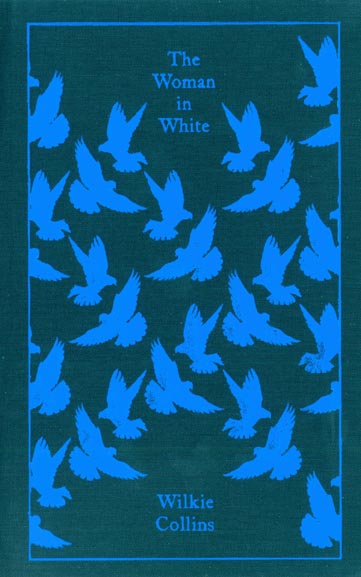
The Woman in White: Part One
This post shall henceforth also be known as 'The Birthday Post' because, yes, you guessed it, today's my birthday! This has almost nothing to do with The Woman in White, other than the fact that I had to schedule reading it and writing this around it, but still, I thought it was worth mentioning! So, yeah, Happy Birthday to meeeeeeee *puts on party hat* *opens presents* *smiles a lot*.
ANYWAY. Now that the festivities are done with, let's get to the serious stuff. The Woman in White- she is very mysterious, and also possibly crazy- I mean, just because she claims that she isn't, doesn't mean that she isn't, cause that's what a crazy person would say anyway! Her introduction did make me jump a tiny bit though, and I wasn't entirely sure that she wasn't a ghost, to be honest, just one of those new fangled ghosts that can touch things and have just escaped from the asylum, apparently.
So, she's already very interesting. She's nearly the most interesting character so far, but then there's Marian who is clearly awesome and who I'm going to marry some day. I mean, you have to love a girl with that much charisma and natural ease with everyone, who's really shrewd and awesome and can investigate things and generally just walk around being awesome. I can't even tell you how much it bugs me that Walter fancies her much much less interesting sister just because she's, you know, pretty. (Also, can we talk about the fact that she looks so much like The Woman in White? Is that going to be a thing, or should I just stop talking about it now?) This genuinely just makes me want to constantly kick Walter until he admits that Marian is the greatest and that, even though her face is gross (allegedly) she would be the much better companion and that she's just generally the greatest. And, if you'll just let me be really petty for a minute, does Wilkie Collins really have the right to value beauty over everything else? We all saw the dude's forehead, right?
What else? Well, Mr Fairlie is clearly nuts, and that letter written in the third person was about the weirdest thing I've read in a while. Oh, and there's clearly more to Mrs Vesey than meets the eye- she's possibly silently plotting against everyone, and it's only a matter of time before her evil plans come to fruition... Maybe. And, clearly, Sir Percival Glyde has the best name, maybe ever. As an English reader of The Woman in White (and possibly the only English reader in this readalong of it, although I can't be sure about that...) I felt like it was my duty to look up the difference between a knight and a baronet, which, as I'm sure you'll remember, was a thing. And... I'm still not sure. Other than a baronet is a higher honour than a knight (which is why Marian gets all haughty about it) and it's the only hereditary honour which isn't a peerage. Very illuminating, or, you know not.
I totally realise that that last paragraph is going to come back to haunt me when everyone else has figured out what a baronet is, and I'm the stupid person who thought I'd be able to figure it out because of, you know, my nationality. Turns out, it doesn't quite work like that! But anyway- everything's all very mysteriously mysterified, and I'm very intrigued to keep reading. This is as opposed to my feelings last week, where I couldn't be bothered to open it, left it til Saturday evening, and was typing this into Sunday morning (hey, did you all have a good Easter? I probably will/did or something...) So hopefully this newfound enthusiasm will have me reading away like a good little reader this week. We can but hope...
P.S. Did I mention it's my birthday? I enjoy the fact that it's on Easter Monday, because it means I can pretend it's an international holiday just for me, and not for that other dude who died aaaages ago. So enjoy your day off work in my honour!
ANYWAY. Now that the festivities are done with, let's get to the serious stuff. The Woman in White- she is very mysterious, and also possibly crazy- I mean, just because she claims that she isn't, doesn't mean that she isn't, cause that's what a crazy person would say anyway! Her introduction did make me jump a tiny bit though, and I wasn't entirely sure that she wasn't a ghost, to be honest, just one of those new fangled ghosts that can touch things and have just escaped from the asylum, apparently.
So, she's already very interesting. She's nearly the most interesting character so far, but then there's Marian who is clearly awesome and who I'm going to marry some day. I mean, you have to love a girl with that much charisma and natural ease with everyone, who's really shrewd and awesome and can investigate things and generally just walk around being awesome. I can't even tell you how much it bugs me that Walter fancies her much much less interesting sister just because she's, you know, pretty. (Also, can we talk about the fact that she looks so much like The Woman in White? Is that going to be a thing, or should I just stop talking about it now?) This genuinely just makes me want to constantly kick Walter until he admits that Marian is the greatest and that, even though her face is gross (allegedly) she would be the much better companion and that she's just generally the greatest. And, if you'll just let me be really petty for a minute, does Wilkie Collins really have the right to value beauty over everything else? We all saw the dude's forehead, right?
What else? Well, Mr Fairlie is clearly nuts, and that letter written in the third person was about the weirdest thing I've read in a while. Oh, and there's clearly more to Mrs Vesey than meets the eye- she's possibly silently plotting against everyone, and it's only a matter of time before her evil plans come to fruition... Maybe. And, clearly, Sir Percival Glyde has the best name, maybe ever. As an English reader of The Woman in White (and possibly the only English reader in this readalong of it, although I can't be sure about that...) I felt like it was my duty to look up the difference between a knight and a baronet, which, as I'm sure you'll remember, was a thing. And... I'm still not sure. Other than a baronet is a higher honour than a knight (which is why Marian gets all haughty about it) and it's the only hereditary honour which isn't a peerage. Very illuminating, or, you know not.
I totally realise that that last paragraph is going to come back to haunt me when everyone else has figured out what a baronet is, and I'm the stupid person who thought I'd be able to figure it out because of, you know, my nationality. Turns out, it doesn't quite work like that! But anyway- everything's all very mysteriously mysterified, and I'm very intrigued to keep reading. This is as opposed to my feelings last week, where I couldn't be bothered to open it, left it til Saturday evening, and was typing this into Sunday morning (hey, did you all have a good Easter? I probably will/did or something...) So hopefully this newfound enthusiasm will have me reading away like a good little reader this week. We can but hope...
P.S. Did I mention it's my birthday? I enjoy the fact that it's on Easter Monday, because it means I can pretend it's an international holiday just for me, and not for that other dude who died aaaages ago. So enjoy your day off work in my honour!
Friday, 6 April 2012
Devouring Books: Notes From A Small Island by Bill Bryson
Ah Bill. You are so awesome, you've kind of done what we all thought was the near impossible, and made me kind of appreciate my own country a little bit (as opposed to not at all). I mean, I'm not saying that I wouldn't rather have been reading Notes from a Small Island in some wondrous faraway land and feeling mildly nostalgic about little old England, but as it was, it was still pretty nice!
In Notes from a Small Island, Bryson basically undertakes the thrilling quest of travelling around Britain (well, not Northern Ireland, but the other bits) for 7 weeks, as a little nostalgia/learning trip before moving back to the history vacuum that is America (sorry. But, you know, comparatively, yeah..). All of which, to me, sounded like a fairly unexciting premise for a book, since I live here and all, and hey, it's not that exciting! This is perhaps why the book languished on my shelves for a very very long time, since my brain went 'ooh Bryson!' when I saw it and bought it, and then the second I got it home and read the back of it, I was like 'okaaay... maybe I'll just shelve that one for a while...'
Big mistake you guys! Because Bryson, as I've seen many times before, isn't afraid to take the piss out of things he is fond of, and he's very fond of England. That means that, when he grumbles about the fact that all high streets in England (in fact, in Britain) literally look exactly the same (and oh my gosh, it's so true! Even in like Stratford Upon Avon, there's all the same shops as there are in the nearest town to me, except they look slightly more Tudor-ish. Sad but true story.) I'm right there with him, but also when he says things like how English people think that taking one chocolate when it's offered is really naughty, and go "oooh, I shouldn't, but go on then!", I'm in complete agreement with him that it's kind of adorable!
As is the case whenever I read Bryson, I forgot to write down any quotes from it, which is such a shame because it's so funny, and sometimes crochety, and just all round good stuff, and yet I can't even remember a lot of my favourite bits. I do remember his meeting 'the most boring man in the world', and when telling his readers that the man was a widower, he says, 'his wife having presumably committed suicide', which is at once SO mean, and yet SO funny! Somehow I let Bryson get away with things that I would mostly find sort of offensive or mean, and that's down to both delivery, and to the underlying love he always always shows for his subject. In Notes from a Big Country, whenever he was being mean about Americans (calling them stupid and whatnot) there was an underlying appreciation for their politeness and smileyness, and that made everything ok, and the same thing applies for this book.
I didn't think Notes from a Small Island was perfect- there was slightly too much moaning about architecture (which are probably valid arguments, it's just that I haven't seen these monstrosities he goes on about and hence don't really care about them) because it just got a bit too moany, and it was also a tiny bit dated. This is obviously nothing to do with Bryson or his writing, but it's just that things are a bit different here now than they were in 1995- the high streets all look similar because of all the empty shops on them, and I'm sure there are even more ugly buildings. Having said that, there is still the great north and south divide that Bryson talks about, Stonehenge is still something you really only need to see for about two minutes, and there's even a brand new Tory government that's probably even worse than the one in charge when Bryson was writing. And above all, British people remain remarkably similar- the apologising when someone walks into you (I genuinely do that all the time), the innate willingness to queue, and the weird national obsession with cricket (or maybe that's just my dad...). It all just made me go 'awww, Britain!' really, and just want to gather the whole country in a big hug.
So, yeah. Bryson's really done the unthinkable in getting me to appreciate my own country more, and for that I applaud him. It's even inspired me to want to visit a lot more English places (and considering that I have no money, that's probably the best holiday I can hope for anyway!) and to possibly even venture up to Scotland one day (if you only knew how much I dislike Scotland, that would freak you the hell out). But everything about Britain is in here: the good, the bad, and the indifferent, and this statement which is wholly accurate: "What a wondrous place this was - crazy as fuck, of course, but adorable to the tiniest degree." Yep. And there you go- endorsed by an English person. What more could you need to read this?!
In Notes from a Small Island, Bryson basically undertakes the thrilling quest of travelling around Britain (well, not Northern Ireland, but the other bits) for 7 weeks, as a little nostalgia/learning trip before moving back to the history vacuum that is America (sorry. But, you know, comparatively, yeah..). All of which, to me, sounded like a fairly unexciting premise for a book, since I live here and all, and hey, it's not that exciting! This is perhaps why the book languished on my shelves for a very very long time, since my brain went 'ooh Bryson!' when I saw it and bought it, and then the second I got it home and read the back of it, I was like 'okaaay... maybe I'll just shelve that one for a while...'
Big mistake you guys! Because Bryson, as I've seen many times before, isn't afraid to take the piss out of things he is fond of, and he's very fond of England. That means that, when he grumbles about the fact that all high streets in England (in fact, in Britain) literally look exactly the same (and oh my gosh, it's so true! Even in like Stratford Upon Avon, there's all the same shops as there are in the nearest town to me, except they look slightly more Tudor-ish. Sad but true story.) I'm right there with him, but also when he says things like how English people think that taking one chocolate when it's offered is really naughty, and go "oooh, I shouldn't, but go on then!", I'm in complete agreement with him that it's kind of adorable!
As is the case whenever I read Bryson, I forgot to write down any quotes from it, which is such a shame because it's so funny, and sometimes crochety, and just all round good stuff, and yet I can't even remember a lot of my favourite bits. I do remember his meeting 'the most boring man in the world', and when telling his readers that the man was a widower, he says, 'his wife having presumably committed suicide', which is at once SO mean, and yet SO funny! Somehow I let Bryson get away with things that I would mostly find sort of offensive or mean, and that's down to both delivery, and to the underlying love he always always shows for his subject. In Notes from a Big Country, whenever he was being mean about Americans (calling them stupid and whatnot) there was an underlying appreciation for their politeness and smileyness, and that made everything ok, and the same thing applies for this book.
I didn't think Notes from a Small Island was perfect- there was slightly too much moaning about architecture (which are probably valid arguments, it's just that I haven't seen these monstrosities he goes on about and hence don't really care about them) because it just got a bit too moany, and it was also a tiny bit dated. This is obviously nothing to do with Bryson or his writing, but it's just that things are a bit different here now than they were in 1995- the high streets all look similar because of all the empty shops on them, and I'm sure there are even more ugly buildings. Having said that, there is still the great north and south divide that Bryson talks about, Stonehenge is still something you really only need to see for about two minutes, and there's even a brand new Tory government that's probably even worse than the one in charge when Bryson was writing. And above all, British people remain remarkably similar- the apologising when someone walks into you (I genuinely do that all the time), the innate willingness to queue, and the weird national obsession with cricket (or maybe that's just my dad...). It all just made me go 'awww, Britain!' really, and just want to gather the whole country in a big hug.
So, yeah. Bryson's really done the unthinkable in getting me to appreciate my own country more, and for that I applaud him. It's even inspired me to want to visit a lot more English places (and considering that I have no money, that's probably the best holiday I can hope for anyway!) and to possibly even venture up to Scotland one day (if you only knew how much I dislike Scotland, that would freak you the hell out). But everything about Britain is in here: the good, the bad, and the indifferent, and this statement which is wholly accurate: "What a wondrous place this was - crazy as fuck, of course, but adorable to the tiniest degree." Yep. And there you go- endorsed by an English person. What more could you need to read this?!
Thursday, 5 April 2012
Devouring Films: Battle Royale
I think I need to talk about Battle Royale. Because OMG, it's so awesome- like, much more awesome than I expected it to be, and I expected it to be pretty good because Quentin Tarantino said so. BUT I was expecting it to be good in a kind of violent, bloody way, and while that was definitely involved (spurting blood is basically an art form in Japanese cinema, I'm fairly sure) it also involved some real head thinking which, I have to say, I do like from a film.
As I'm sure is fairly obvious, I watched Battle Royale because of the whole Hunger Games thing. I mean, I had heard of Battle Royale before then, but I was fairly horrified by the whole concept- kids killing each other, what the hell?! Obviously reading and seeing The Hunger Games basically broke that taboo for me, and so I became a lot more interested in watching Battle Royale (plus they had it on Netflix, so how could I not watch it?!) And I don't really want to get into a whole Battle Royale vs The Hunger Games thing because 1. It's not as simple a comparison as you might think, and 2. I haven't read the book of Battle Royale so I can't make a fully informed decision. Also because I don't want to be mean about The Hunger Games, because Battle Royale is bloody AMAZING.
Seriously. Ok, so I don't want to tell you too much about it because I want you to watch it for yourselves and figure it out, but I'll say this. The basic premise of Battle Royale is that the Japanese government has collapsed, and all these kids walked out of school one day (like, 800,000, not just a few kids...) and as a punishment they set up this Battle Royale thing. So far, so Hunger Games (I don't know how aware of Battle Royale Suzanne Collins was when she wrote The Hunger Games, but there are a fair few similarities). But the thing is, this Battle Royale initiative seems to be fairly secretive, so instead of being fully aware that there is a chance they might be picked for this battle to the death, a whole class is kidnapped and then told they have to kill or be killed. And I think this is SO much more horrifying than The Hunger Games (here's that comparison thing coming) for two reasons- Not having any idea that it could happen, they have no way to at least slightly mentally prepare for it, so it's such a horrifying shock of a thing to have to do; and, even worse, the people they have to kill are their classmates, or, if you like, their best friends. I mean, really, it's horrifying!
One of the things I really like about Battle Royale is the way that every single death is made clear, and you get a few seconds to absorb the shock of each of them. Rather than just being like violence porn, you really get the sense that every life was precious, and it's tragic that each of them was lost. I feel like this was something lacking from The Hunger Games, where many of the deaths were just obscure and undocumented. Even more extraordinarily, some of the children in Battle Royale choose suicide, and refuse to be part of the government's game. I mean, colour me surprised that there are suicides in a Japanese movie, but really it seems like a much stronger protest than being involved in killing anyone else, and it's something that I can't imagine seeing in an American movie- in a way, it's a far more noble action, and it's just not something that fits into an American, individualistic way of seeing the world.
But anyway- I've already said more than I wanted to say, and I really just wanted to describe this one part of the film that I thought was really fantastic, and really reflective of what would actually happen in such a horrifying situation. While it's not really integral to the plot, I'm basically going to describe it as it happened, so if you want to watch the movie then turn away now (or, you know, start reading again where I put end spoiler...) So, basically, about 7 or 8 of the girls from the class have gotten together in this lighthouse and are essentially pretending that nothing's wrong- they're just on a nice school trip and are hanging out and everything's fine. Only one of the girls dares to say: ''we're all going to die tomorrow, aren't we?" (I should explain- if after 3 days there isn't a winner, everyone dies) and for this she gets scolded for being so negative! Everything's fine! And they just keep kidding themselves that this is the case, until one of their number is accidentally poisoned (and it is an accident, but to explain would be to give too much away) and everything goes INSANE. All the girls just snap, everyone starts accusing each other, and then they all end up shooting and killing each other. Which, obviously, is horrible, but also feels like something that would actually happen- delusions that everything's fine, followed by one little thing (ok, a poisoning isn't a little thing, but if it wasn't that, it would have been something else) that makes everyone distrust and hate each other, and, eventually, everyone killing everyone else. It's messed up, but it's probably the position that most real people would actually take in the circumstances. END OF KIND OF SPOILER.
So, basically, I was super duper impressed by Battle Royale, and also when I say I won't compare it to The Hunger Games, I'm apparently lying. Good to know, I guess! Basically, if you want kind of a more fucked up version of The Hunger Games, with arguably a better story behind it AND a belief that every death counts, then this is perfect for you. And even if you think you don't want that, you probably do so watch this anyway.
As I'm sure is fairly obvious, I watched Battle Royale because of the whole Hunger Games thing. I mean, I had heard of Battle Royale before then, but I was fairly horrified by the whole concept- kids killing each other, what the hell?! Obviously reading and seeing The Hunger Games basically broke that taboo for me, and so I became a lot more interested in watching Battle Royale (plus they had it on Netflix, so how could I not watch it?!) And I don't really want to get into a whole Battle Royale vs The Hunger Games thing because 1. It's not as simple a comparison as you might think, and 2. I haven't read the book of Battle Royale so I can't make a fully informed decision. Also because I don't want to be mean about The Hunger Games, because Battle Royale is bloody AMAZING.
Seriously. Ok, so I don't want to tell you too much about it because I want you to watch it for yourselves and figure it out, but I'll say this. The basic premise of Battle Royale is that the Japanese government has collapsed, and all these kids walked out of school one day (like, 800,000, not just a few kids...) and as a punishment they set up this Battle Royale thing. So far, so Hunger Games (I don't know how aware of Battle Royale Suzanne Collins was when she wrote The Hunger Games, but there are a fair few similarities). But the thing is, this Battle Royale initiative seems to be fairly secretive, so instead of being fully aware that there is a chance they might be picked for this battle to the death, a whole class is kidnapped and then told they have to kill or be killed. And I think this is SO much more horrifying than The Hunger Games (here's that comparison thing coming) for two reasons- Not having any idea that it could happen, they have no way to at least slightly mentally prepare for it, so it's such a horrifying shock of a thing to have to do; and, even worse, the people they have to kill are their classmates, or, if you like, their best friends. I mean, really, it's horrifying!
One of the things I really like about Battle Royale is the way that every single death is made clear, and you get a few seconds to absorb the shock of each of them. Rather than just being like violence porn, you really get the sense that every life was precious, and it's tragic that each of them was lost. I feel like this was something lacking from The Hunger Games, where many of the deaths were just obscure and undocumented. Even more extraordinarily, some of the children in Battle Royale choose suicide, and refuse to be part of the government's game. I mean, colour me surprised that there are suicides in a Japanese movie, but really it seems like a much stronger protest than being involved in killing anyone else, and it's something that I can't imagine seeing in an American movie- in a way, it's a far more noble action, and it's just not something that fits into an American, individualistic way of seeing the world.
But anyway- I've already said more than I wanted to say, and I really just wanted to describe this one part of the film that I thought was really fantastic, and really reflective of what would actually happen in such a horrifying situation. While it's not really integral to the plot, I'm basically going to describe it as it happened, so if you want to watch the movie then turn away now (or, you know, start reading again where I put end spoiler...) So, basically, about 7 or 8 of the girls from the class have gotten together in this lighthouse and are essentially pretending that nothing's wrong- they're just on a nice school trip and are hanging out and everything's fine. Only one of the girls dares to say: ''we're all going to die tomorrow, aren't we?" (I should explain- if after 3 days there isn't a winner, everyone dies) and for this she gets scolded for being so negative! Everything's fine! And they just keep kidding themselves that this is the case, until one of their number is accidentally poisoned (and it is an accident, but to explain would be to give too much away) and everything goes INSANE. All the girls just snap, everyone starts accusing each other, and then they all end up shooting and killing each other. Which, obviously, is horrible, but also feels like something that would actually happen- delusions that everything's fine, followed by one little thing (ok, a poisoning isn't a little thing, but if it wasn't that, it would have been something else) that makes everyone distrust and hate each other, and, eventually, everyone killing everyone else. It's messed up, but it's probably the position that most real people would actually take in the circumstances. END OF KIND OF SPOILER.
So, basically, I was super duper impressed by Battle Royale, and also when I say I won't compare it to The Hunger Games, I'm apparently lying. Good to know, I guess! Basically, if you want kind of a more fucked up version of The Hunger Games, with arguably a better story behind it AND a belief that every death counts, then this is perfect for you. And even if you think you don't want that, you probably do so watch this anyway.
Wednesday, 4 April 2012
Revisiting Books... Little Women by Louisa May Alcott
Ah, Little Women. I have posted many, many times before about not having read Good Wives (or, to most people, the second half of Little Women) until I was about 20, long after I'd read Little Women (or, the first part of Little Women) for the first time, and lots of times after that. It is, therefore, still difficult for me to accept some of the things that happen in the second part of the story, and it's hard for me to not want to stop reading when Mr March comes home, just at the point where everything is perfect. Rereading Little Women earlier this month was the first time I read the two books together (or, the first time I read the whole book) and it was a pretty new experience than my usual Little Women reading.
For starters, it took longer. And obviously that's something I expected because, you know, it's twice as long; but that's not why it took longer. Nope, once I got onto the second part, I significantly slowed my reading- I didn't want the things that I now knew happened to happen, and so, the slower I read, the slower they would unfold. I wasn't timing myself or anything, but it probably took me twice as long to read the second half than the first half (although- this was partially down to the fact that I started reading A Short History of Nearly Everything part of the way through as well, which was nigh on unputdownable). And it's not like the second half isn't well written! I love that Meg still gets a look-in even though she's married (much of literature just ignoring or writing off married women) and her domestic episodes are some of the funniest moments of the second part. But. There's just so much sadness, and Laurie gets all unhappy which I don't approve of, and (I'm hoping we all know this by now) Beth dies! Which just isn't on and I can't even cope with it so let's pretend it just doesn't happen, yes?
Because, damn, I love those Little Women. I do. I think I fall in love with them around the bit where they give their lovely Christmas breakfast away to the poor German family that lives in the woods, and my love for them never goes away, which makes their sadnesses in the second part so much harder to bear. And when I say I love them, I obviously don't mean Amy because, you know, annoying and also (SPOILER) Laurie how could you?! I mean, I don't even really think that Jo and Laurie should have gotten married (even though, when Little Women used to end in the middle I definitely imagined them getting married eventually, for young friendship to blossom into love) but Amy?! Seriously?! That girl rubs me up in all the wrong ways, even though she gets much more bearable in the second part, I still can't forgive her for burning Jo's book... (END SPOILER).
I don't know about you, but from pretty much every book I read as a child, I had my favourite characters. My favourite babysitter's club member was Dawn, and my favourite Wakefield twin was Jessica, and my favourite March sister was, without a doubt, Beth. I still love her so much- she has this whole quiet calm thing going on, and you know that just her presence would soothe you and make everything seem right with the world. And I'm pretty sure that she's also Alcott's favourite sister, which may well have influenced my love of her from the very start, because, well, just have a look at this:
So, to summarise: Beth is awesome, Jo is also awesome, and Little Women is awesome, although the first part will always be more awesome to me, if only because of much exposure to it in my childhood. My continuing love for Little Women isn't based only on nostalgia though- the characters are still as wonderful and as vivid to me as they always were, and even though the second part of the story isn't always to my liking, being able to spend more time in the company of these beloved characters long after my childhood had ended was a really unexpected and lovely treat. I will always love the Marches, and will never have to be convinced much to spend time in their lovely, although at times difficult, little Massachusetts world.
For starters, it took longer. And obviously that's something I expected because, you know, it's twice as long; but that's not why it took longer. Nope, once I got onto the second part, I significantly slowed my reading- I didn't want the things that I now knew happened to happen, and so, the slower I read, the slower they would unfold. I wasn't timing myself or anything, but it probably took me twice as long to read the second half than the first half (although- this was partially down to the fact that I started reading A Short History of Nearly Everything part of the way through as well, which was nigh on unputdownable). And it's not like the second half isn't well written! I love that Meg still gets a look-in even though she's married (much of literature just ignoring or writing off married women) and her domestic episodes are some of the funniest moments of the second part. But. There's just so much sadness, and Laurie gets all unhappy which I don't approve of, and (I'm hoping we all know this by now) Beth dies! Which just isn't on and I can't even cope with it so let's pretend it just doesn't happen, yes?
Because, damn, I love those Little Women. I do. I think I fall in love with them around the bit where they give their lovely Christmas breakfast away to the poor German family that lives in the woods, and my love for them never goes away, which makes their sadnesses in the second part so much harder to bear. And when I say I love them, I obviously don't mean Amy because, you know, annoying and also (SPOILER) Laurie how could you?! I mean, I don't even really think that Jo and Laurie should have gotten married (even though, when Little Women used to end in the middle I definitely imagined them getting married eventually, for young friendship to blossom into love) but Amy?! Seriously?! That girl rubs me up in all the wrong ways, even though she gets much more bearable in the second part, I still can't forgive her for burning Jo's book... (END SPOILER).
I don't know about you, but from pretty much every book I read as a child, I had my favourite characters. My favourite babysitter's club member was Dawn, and my favourite Wakefield twin was Jessica, and my favourite March sister was, without a doubt, Beth. I still love her so much- she has this whole quiet calm thing going on, and you know that just her presence would soothe you and make everything seem right with the world. And I'm pretty sure that she's also Alcott's favourite sister, which may well have influenced my love of her from the very start, because, well, just have a look at this:
"There are many Beths in the world, shy and quiet, sitting in corners till needed, and living for others so cheerfully, that no one sees the sacrifices till the little cricket on the hearth stops chirping, and the sweet sunshiny presence vanishes, leaving silence and shadow behind."I mean, just, *sigh*, you know? And may I add that that little ditty comes on page THIRTY NINE of my copy, so let's just say, Beth's death? Not entirely unexpected, although still indescribably painful and upsetting. Nowadays when I read Little Women, I definitely identify with and admire Jo a lot more, but my heart and my reading memory is reserved for Beth, and her sweet and shy and, lets face it, wonderful ways. MAN, I love her!
So, to summarise: Beth is awesome, Jo is also awesome, and Little Women is awesome, although the first part will always be more awesome to me, if only because of much exposure to it in my childhood. My continuing love for Little Women isn't based only on nostalgia though- the characters are still as wonderful and as vivid to me as they always were, and even though the second part of the story isn't always to my liking, being able to spend more time in the company of these beloved characters long after my childhood had ended was a really unexpected and lovely treat. I will always love the Marches, and will never have to be convinced much to spend time in their lovely, although at times difficult, little Massachusetts world.
Tuesday, 3 April 2012
Top Ten Tuesday
I love reading books in a day. Love. It. And really, I have ample opportunity to do it, but I hardly ever do anymore- which I guess is down to trying to avoid headaches and trying to do things that are totally useful and whatnot. But anyway. Here, for various reasons, are my:
Top Ten Books to read in a day
1. To Kill A Mockingbird by Harper Lee- I'm not sure I've ever actually read this in a day, but it wouldn't take a lot of convincing to make me do so. As a first time read it should probably be savoured, but after that, I'd probably just recommend reading it daily.
2. Any Harry Potter Book- I more or less read each of the Harry Potter books in a day, and those were the best 14 days of my life! But really, I do actually find them fairly impossible to put down, so I can't really help but read each of them cover to cover.
3. 1Q84 by Haruki Murakami- I'm having some 'I just finished it and I LOVE IT SO MUCH' feelings about this book, hence its inclusion on this list. But really, if it was a really really long day, I think reading all 1000 or so pages of this would be a good way to spend it, especially since I found it difficult, and sometimes impossible to put down.
4. How To Be A Woman by Caitlin Moran- I kind of accidentally read almost all of this in one day, and it was amazingly excellent! I'm not sure if you can do anything but read it all at once, so I'd recommend setting aside a day when you decide to start reading it.
5. Any Shakespeare Play- This isn't so much a 'I can't put it down!' thing, but more of a useful thing- I find the best way to read a Shakespeare play (or really any play, I guess) is all in one go, because it's written to be performed all at once. Also because it's sometimes difficult to understand, and in the mental strain of doing that, I sometimes forget the plot a little bit...
6. The Curious Incident of the Dog in the Nighttime by Mark Haddon- I managed to get this book out of the library one Saturday, take it upstairs to read, and I didn't emerge for a whole afternoon. Because of this I don't remember a whole lot about it, other than the fact that it was completely compelling, and I literally couldn't put it down.
7. The New York Trilogy by Paul Auster- I love this book, but that's not why you should read it in a day. There are a whole lot of interlinking things going on in this book, and while you can still follow them if you leave days between reading, it's a lot more jarring and kind of interesting if you don't.
8. Any Bill Bryson Book- If, say, you were locked in a room without food or water and you were told that you weren't allowed to leave until you'd read a whole book; you'd want there to be a Bill Bryson book on offer. In fact, if there was a Bill Bryson book, you'd probably forget about eating and things anyway, and just be completely entertained, and at the same time accidentally learning things. So, yeah. He's a great writer to read all at once.
9. Maus I and II by Art Speigelman- I don't even know how to put down Maus once I've started reading it, so if you have, you've got some mad skills that I really don't have! It really doesn't take very long to read either, but remains one of the best (and saddest) reading experiences of my life.
10. The God of Small Things by Arundhati Roy- I wasn't necessarily expecting to be as compelled by this book as I really was- my main memory of it is reading it for basically all of a hot summer's day, and basically being in love with it. Actually, I really have to read it again...
So, yeah. My top ten books to read in a day. I'm so looking forward to the readathon later this month, where I can read many books in one day and feel super duper awesome about it- maybe I'll find some new favourites that I can add to this list!
Top Ten Books to read in a day
1. To Kill A Mockingbird by Harper Lee- I'm not sure I've ever actually read this in a day, but it wouldn't take a lot of convincing to make me do so. As a first time read it should probably be savoured, but after that, I'd probably just recommend reading it daily.
2. Any Harry Potter Book- I more or less read each of the Harry Potter books in a day, and those were the best 14 days of my life! But really, I do actually find them fairly impossible to put down, so I can't really help but read each of them cover to cover.
3. 1Q84 by Haruki Murakami- I'm having some 'I just finished it and I LOVE IT SO MUCH' feelings about this book, hence its inclusion on this list. But really, if it was a really really long day, I think reading all 1000 or so pages of this would be a good way to spend it, especially since I found it difficult, and sometimes impossible to put down.
4. How To Be A Woman by Caitlin Moran- I kind of accidentally read almost all of this in one day, and it was amazingly excellent! I'm not sure if you can do anything but read it all at once, so I'd recommend setting aside a day when you decide to start reading it.
5. Any Shakespeare Play- This isn't so much a 'I can't put it down!' thing, but more of a useful thing- I find the best way to read a Shakespeare play (or really any play, I guess) is all in one go, because it's written to be performed all at once. Also because it's sometimes difficult to understand, and in the mental strain of doing that, I sometimes forget the plot a little bit...
6. The Curious Incident of the Dog in the Nighttime by Mark Haddon- I managed to get this book out of the library one Saturday, take it upstairs to read, and I didn't emerge for a whole afternoon. Because of this I don't remember a whole lot about it, other than the fact that it was completely compelling, and I literally couldn't put it down.
7. The New York Trilogy by Paul Auster- I love this book, but that's not why you should read it in a day. There are a whole lot of interlinking things going on in this book, and while you can still follow them if you leave days between reading, it's a lot more jarring and kind of interesting if you don't.
8. Any Bill Bryson Book- If, say, you were locked in a room without food or water and you were told that you weren't allowed to leave until you'd read a whole book; you'd want there to be a Bill Bryson book on offer. In fact, if there was a Bill Bryson book, you'd probably forget about eating and things anyway, and just be completely entertained, and at the same time accidentally learning things. So, yeah. He's a great writer to read all at once.
9. Maus I and II by Art Speigelman- I don't even know how to put down Maus once I've started reading it, so if you have, you've got some mad skills that I really don't have! It really doesn't take very long to read either, but remains one of the best (and saddest) reading experiences of my life.
10. The God of Small Things by Arundhati Roy- I wasn't necessarily expecting to be as compelled by this book as I really was- my main memory of it is reading it for basically all of a hot summer's day, and basically being in love with it. Actually, I really have to read it again...
So, yeah. My top ten books to read in a day. I'm so looking forward to the readathon later this month, where I can read many books in one day and feel super duper awesome about it- maybe I'll find some new favourites that I can add to this list!
Subscribe to:
Posts (Atom)


.jpeg)