Wednesday, 12 October 2011

Orwell October: The Road to Wigan Pier

At first, I thought I wasn't going to get on with The Road to Wigan Pier. It's a non-fiction book, and because it's Orwell it deals with a lot of the social problems prevalent in the 1930s, and I mean, while I have sympathy for the miners (both in and out of work) of the thirties, reading a whole book about them and their woes wasn't exactly my idea of a good time. Fortunately for me, the second half of the book proved to be surprisingly interesting (well, that sounds harsh, but you know what I mean) and informative to the state of Socialism in the thirties, and it actually taught me a lot about the ways in which socialism can fail.

The first part was a bit of a slog though, I've got to admit, because there's a lot of talk about shillings and the way that miners lived, and while interesting, it's difficult to relate to because the social problems that exist now are so different, although no less serious. I've got to admit that I sort of skimmed over this section, and didn't really get much out of it other than, you know, it was (and I'm sure still is) really hard being a miner. What did still completely ring true though, was the things Orwell writes about unemployment- the fact that it's completely crushing, and depressing, and just an awful state to be in, especially when there actually are NO JOBS (this is just a description of my life for the past year, and it's really no surprise considering that we're in the middle of the worst depression since the thirties, I think?) Orwell says so many things that are just true about unemployment, and this is possibly the best:
"There is no doubt about the deadening, debilitating effect of unemployment upon everybody, married or single, and upon men more than upon women. [ok, so that I don't agree with, obviously. But that probably was slightly more true in the thirties, which isn't a good thing but still the way things were.] The best intellects will not stand up against it... to write books you need not only comfort and solitude - and solitude is never easy to attain in a working class home - you also need peace of mind. You can't settle to anything, you can't command the spirit of hope in which anything has got to be created, with that dull evil cloud of unemployment hanging over you."
 Ain't that the truth though, George?

The second part of the book, anyway, is a lot more interesting in relation to now, and has a lot to say about why Socialism just wasn't working in the thirties, and why it wasn't the least likely thing that Fascism could become the new political structure because Socialism just wasn't good enough to fight against it. I found this interesting, because in my eyes, Socialism is the complete opposite of Fascism, but, according to Orwell's reasoning (which, to be honest, I found faultless) the ultimate end of Socialism is a form of Fascism. This was ultimately a terrifying and hideous thought, but, as Orwell puts it, it's all ok- as long as Socialists remember that, at the root of everything they do is "Liberty and Justice", then all will be well.

I learnt so much about Socialism from this book, actually, that hadn't ever really crossed my mind before, and it's definitely given me a lot to think about. One thing that was most surprising, was the idea that Socialism is all about having a fully mechanised society, having machines to do things people could do, and in general having everything scheduled and perfected down to a point where nothing spontaneous can be done, so nothing bad happens, but at the same time, nothing really happens at all. This was so interesting to me because, whenever I think of Socialism, I think of a happy, smiley world, where everyone helps each other and everyone is well provided for and whether or not you get healthcare doesn't depend on whether you can afford to pay for it or not, and all other crazy ideas like that. I don't dispute Orwell though, because obviously one way to make things better for everyone, is to make everything easier for them. This whole vision of the machine driven world is a pretty horrible one when taken to its extreme, and it is clear in Orwell's telling of this just where the roots of 1984 were coming from.

Orwell, as he always does, has some bright ideas for the future of Socialism, and they are ones which I think still stand true today. Above all, he considers himself a true Socialist (thankfully!), and in order to prevent Fascism from seeming like an appealing prospect, Socialism must change the way it appears from the outside. While those promoting it may well fully believe what they do, the way they act, by being basically giant hippies (before there even were hippies) is not the best way, Orwell believes, to spread their cause. I think this makes sense (much as I love hippies)- if you think about an average Working Class person in the 1930s, who really believes to his core that he's entitled to the same things as any other person, but who is completely put off of the Socialists by their crazy hippy clothes and hair and their vegetarianism, and sort of back away thinking that, these people who are so different to them, can't possibly help them. What Orwell suggests is that, what's really important for Socialists is to not think of class as being about upbringing and accent and all other superficial things like that, but rather in what people earn- Orwell himself, for example, earns not much more than a working class man, but he has a middle-class upbringing (and an upper-class education) but, as long as everyone can get past all the superficial stuff, then they can really work together to effect real, positive change.

So, The Road to Wigan Pier turned out to be full of hidden gems. I recommend it as part of the whole Orwell experience, but there is little in the first section that really needs to be read (at least nowadays) and so much in the second section that still seems relevant today. There is also some discussion of Down and Out in Paris and London, and how that book came about, so if that's one of your favourites (as it is one of mine) this book provides a fun little addition to it. The main point of this book: Socialism=yay, as long as you do it the Orwell way. So, what are you waiting for? Off you go and spread Socialism, you lovely people!

Tuesday, 11 October 2011

Top Ten Tuesday

There's something about reading a book for the first time that can never quite be recreated- nothing like turning the pages, not knowing what's about to happen, but knowing what's happening within you, and that this new thing you're reading is really really exciting. It's wonderful, and while re-reads show the books to still be wonderful, it's not quite the same, because you're not quite the same as you were upon the first reading. With that in mind then, here are the:


Top Ten Books I wish I could read again for the first time


1. The Perks of Being a Wallflower by Stephen Chbosky- I really needed this book when I first read it, and while I haven't re-read it yet, I can't imagine it having quite the same effect on me now. It is utterly wonderful, and I'm so jealous of those who haven't read it yet (also, you guys: read it.)

2. To Kill a Mockingbird by Harper Lee- Just... remember when you were 15 and you wanted to change the world and this book made you see that there are bad people, but on the side of the good we have Atticus and that means everything is going to be ok? I kind of still get that feeling when I read this book, but it's not the same as the very first time.

3. Fight Club by Chuck Palahniuk- This is more of a plot thing than anything else, but remember not knowing what Fight Club was really all about, and so being completely drawn in by it, only have to have the shockingest shock revelation thing happen near the end? It was pretty great, I've gotta say.

4. The Curious Incident of the Dog in the Nighttime by Mark Haddon- To be completely fair I can't remember much about this book, so when I do finally re-read it, it will be sort of like reading it for the first time. But only sort of- I'm not sure if I'll be able to recapture the magic of reading for three hours solidly, and barely noticing that anything else was going on in the world at all. Simply mesmerising, which I hope it can be again.

5. Harry Potter by J K Rowling- Harry Potter comes up suspiciously little on these lists, but this is one I really couldn't keep it off because OH MY GOD, remember how good Harry Potter was (or were- all of them are great) the first time you read it/them, and you felt like you were the only person in the world to discover how great they were? I mean, don't get me wrong, they're still captivating and all, but it's not quite the same once you know all the things that happen...

6. Blonde by Joyce Carol Oates- I know I've only read this recently (my not at all gushing review is here) but I definitely feel like I won't be able to recapture the feeling of reading it for the first time, barely being able to concentrate on anything else for wanting to read this book, and that was along with a cold, which normally means I can't focus on anything. I love it fiercely, and I think I always will, but it won't be quite the same the next time around.

7. Rebecca by Daphne Du Maurier- This is another one of those 'plot points that I won't be able to recapture not knowing' things- I remember being completely taken in by the whole 'Rebecca was fabulous and everyone adored her and you'll never be able to live up to her' thing, before realising that that wasn't precisely the case... Rebecca's definitely not the same once you know what happens (or what has happened), so reading it for the first time is definitely the best.

8. The History of Love by Nicole Krauss- It was so beautiful and wonderfully crafted and just unspeakably lovely that, while I think a re-read would reveal a lot more about it to me because I pretty much just whizzed through it, I'm not sure it can recapture the heart soaring American Beauty feeling that it gave me upon its first reading. But I hope I'm wrong about that.

9. Angels in America by Tony Kushner- Once you pretty much know what all the characters are going to say, it loses its power a bit. But only a very tiny bit. One of my favourite things in the whole wide world ever.

10. Basically every Stephen King book I've read- I mean, I love him for always. But seriously, after the first time, it's just not the same because it's just not as scary (except for It, at which, I swear, I'm always terrified). Even though you pretty much know that Stephen King books have a relatively happy ending, you can never be entirely sure of that until the end of the books. If you've read them before though, and you know that they do... well, nothing can really be scary any more! Sort of...

So that's my top ten. I'm hoping that everyone's lists will involve books that I haven't read, so that I actually can read them for the first time and be enthralled and amazed and just weep with joy and incredulity! Hey, it could happen... it's happened before (see above).
10.

Monday, 10 October 2011

Orwell October: Keep the Aspidistra Flying

I'm now halfway through Orwell's novels (and actually I only have one more to read that isn't a re-read), and while I do love him, I do have to say that it is so clear that he went to Eton. He slips so often into public schoolboy speak (saying things like 'beastly' and 'spiffing') that it would annoy me so much if I didn't like him so much, and annoys me a fair bit anyway! Keep the Aspidistra Flying, being about a fallen public schoolboy and all, is not immune to this slight issue, and hey, guess what, there's a guy living in poverty again! Yay! If I didn't like Orwell so much...

I feel like I'm being slightly unfair because I'm reading all these books really close together which, quite frankly, would probably make anyone a little tired of the repetition of similar themes. This isn't really a criticism of Orwell because I'm pretty sure he's just writing what he knows, but compared to the highly original themes and settings of Animal Farm and 1984, it's a little disappointing. Luckily, though, the writing style that's present in those books is already here, which still makes these books better written than your average, but there's still a fair bit of repetition of themes that is a bit much to deal with within a short space of time.

It doesn't help, with Keep the Aspidistra Flying, that the main character, Gordon, is a complete and utter dick. I'll admit that, at first I thought he was kind of exciting and interesting- a kind of anti-capitalist hero, fighting against the materialistic values du jour and trying to find something deeper, hence why he's a poet. But no, that's not what he was all about at all! Instead, what we've actually got is a severely dysfunctional dude, who, rather than trying to live well without money is utterly obsessed with the fact that he has none, and uses it as an excuse to push people away from him, rather than trying to find anything deeper and better from life. He completely refuses to allow anyone to lend him money or buy him dinner, and yet when he finally gets a bit of money (which, for a supposedly unmaterialistic man he gets a bit too excited about for my liking) he acts like a complete twat and instead of blaming himself he once again blames money. He's completely exasperating and not in a 'ooh, he's so hot and sexy when he's all angry' way, but in a 'why the fuck are you being such a dick, just take that job you don't want and be happy, you utter moron!' way.

Because, oh yes, he does have a job waiting for him that would basically instantly pull him out of poverty, but he doesn't want it because... that would mean he would have money and that would mean he would have a chance to be happy (not because money makes you happy, but because poverty definitely doesn't) and he's basically just a pig-headed idiot. The only real saving grace of the whole thing though, is that it is quite clear that this is also the way Orwell feels about him- that he kind of contradicts himself continually, by wanting to disregard money whilst also being obsessed with it. I actually kind of got the impression that Gordon was possibly not unlike Orwell at a certain stage in his life, although I don't really have any evidence for that- the sort of struggling writer thing was a bit of an indication, but I could be really wrong about this...

Anyway, ignoring Gordon (because he's really annoying), I did like Rosemary, his pragmatic and totally feminist girlfriend (she wants to pay for him sometimes so they can actually, you know, do stuff, but he refuses to let her because he's a dick) and his rich friend Ravelston, who tries to be a socialist, but pretty much fails because he's rich- but he's still lovely, if a bit ineffectual. What either of them is doing around Gordon is never really discussed, but he must have charms beyond what Orwell goes into, since, when he is really down and out, they refuse to let him sink to the depths he actually wants to descend to: "Going to the devil isn't as easy as it sounds. Sometimes your salvation hunts you down like the Hound of Heaven." It's just up for debate whether the reader really wants them to...

Well, look at that. I've managed to go through a whole review without managing aspidistras! An aspidistra is a plant that looks like this (I didn't know this before I google-imaged it, so I had a completely different plant in mind while I was reading):
But anyway, the point of the aspidistra is that it represents the sort of middle class, settled, 'money-worshipping' life that Gordon despises and fears. But here's my problem with him- SPOILER once he does finally settle down, he immediately goes out and gets an aspidistra! It's like he can't see a middle way between being obsessed with money, and shunning money entirely, so he's kind of got to be miserable whatever path he takes. It made me grrrrrr a fair bit the whole way through END SPOILER. So yeah, aspidistras are a big, albeit frustrating, symbol of settling.

I feel like I've been overwhelmingly negative about this book, and I don't think that's necessarily reflective of how I felt while I was reading it. Whilst Gordon did frustrate me terribly, I don't think that you have to love a character to enjoy a book, and while I didn't love Gordon at all, I did think he was reflective of a certain kind of self-defeating personality, that won't let themselves be happy if it means having to make an effort at something they might not massively want to do. He's also a lousy poet. On the whole, I would actually say that I liked this better than A Clergyman's Daughter, even though I liked the protagonist a lot less, and rooted against him almost exclusively. Don't we all need to do that every once in a while though?

Sunday, 9 October 2011

IMM/Mailbox Monday

I wasn't actually going to do an IMM/Mailbox Monday post for at least the whole of October (and, for the first time ever, I have October scheduled down to the very last post!) but this week was so good (or bad, depending on whether or not you live in my house) that I simply had to share all my new books with the whole world. So, without any ado, this week I got:

The God Delusion by Richard Dawkins- I've really been wanting to read this for a really long time just to, you know, see what the dude's got to say. I'm hoping it'll be more scientific and sensible, rather than just going 'everyone who has religious beliefs is a MORON!' not because that'll offend me personally, but because, you know, hate ain't cool. So we'll see if Dawkins impresses me or not.


Marlon Brando by Patricia Bosworth- I may have mentioned this once or twice (or probably more than that in my Godfather review alone, actually) but I love Marlon Brando quite an unhealthy amount, even old fat Marlon Brando (only, you know, in a really different way). This biography is quite short, but it looks pretty promising as an account of his life- plus I've never read a biography of Brando before, so it should be illuminating no matter what!


The Awakening by Kate Chopin- I don't know why I've heard of this, or where I've heard of it from, but until literally this week I thought it was a chick lit book for some unexplainable reason. Actually it's a nineteenth century and (I think) feministy classic before feminism was a thing. But I might have just made that up because I read the back and it mentioned women. And I can't even be bothered to look it up on Wikipedia to see if that's true or not, so let's just pretend that it is. Anyway, I bought that!


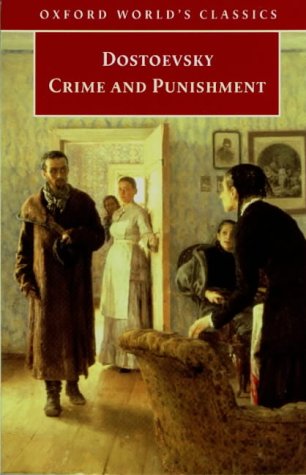
Crime and Punishment by Fyodor Dostoevsky- Don't tell anyone, but I actually already owned this book! BUT, in this charity shop they had an Oxford World Classics edition, which is much prettier than my original copy (which I think is an old Wordsworth classics edition and is also tres ugly) so I thought, if I have a pretty copy, I'm much more likely to want to read it! I'm not sure what I'm going to do with the old copy, possibly give it away to another charity shop, or maybe even as a giveaway (the Literary Giveaway Hop is less than a week away...) but we'll see. I'm keeping the pretty copy anyway!


Pudd'nhead Wilson by Mark Twain- I genuinely know nothing about this book, other than that it's by Mark Twain, has a pretty awesome title, and cost 35p (which I guess is, I don't know, about 50 cents?) I don't think I really need to give much more justification than that for buying it!


Beloved by Toni Morrison- I've read quite a few reviews of this recently, and I'm really interested in it, hence the buying of it! There were actually three or four Morrison books in the charity shop I got this from, but I thought I'd just see whether or not I actually like her before I start going all crazy and buying everything she's ever written (see: Rose Tremain- I own like four books by her, and haven't actually read a single one...) I have been looking in libraries for this for a while too, so I'm definitely excited to have it.


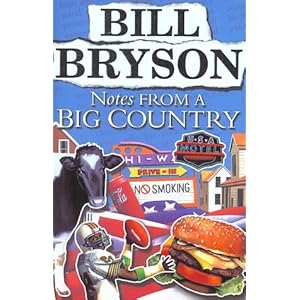
Notes From A Big Country by Bill Bryson- Bill is another one of those authors whose books I own but haven't actually got around to reading yet... Alley from What Red Read actually recommended this to me when I read Stephen Fry in America, and I'm definitely thinking that this might earn the prestigious title of the second ever Bryson book I've read (the first being Shakespeare, which almost doesn't count because I read it for the Shakespeare element rather than the Bryson factor). I've really got to read something by him soon though, because my unread collection is really getting ridiculous.


The Finkler Question by Howard Jacobson- And finally.... If you've made it this far in the post then you're a trooper and you should probably give yourself a prize- go and have some Diet Coke and a cake, and then come back. Are you feeling more refreshed now? Good. I've wanted to read The Finkler Question since I read this giant review of it in The New Yorker (you know when they give a book a giant review that it's worth reading) and I was really excited to get a literally brand new copy of it from yet another charity shop. So, yay!


I'm done now, I swear. Tell me, if you can, are any of these books worth reading? And are there any I should just dump back to charity shops? And aren't you pleased at all the money I've donated this week?! To all those people who are new here, greetings! If you like George Orwell, then boy have you come to the right place at the right time, because all this month I'm reading Orwell books (I call it Orwell October because I'm a genius) and then saying stuff about them. So far, I've reviewed Burmese Days, Down and Out in Paris and London, and A Clergyman's Daughter, and stay tuned for some more Orwell fun! And if you don't like Orwell, well (haha) I'll stop with the madness in November and go back to reading superwickedawesome books that are by other people! So stick around for a while if you please, and if not then, you know, have a nice week anyway!

Friday, 7 October 2011

Orwell October: A Clergyman's Daughter

A fun fact about A Clergyman's Daughter- before I read it, both times, I thought it was about a girl who got hooked on drugs and had to work her way out of that whole situation. I had absolutely no basis for that thought, and it's wrong anyway, so who knows what I was thinking! Twice! Anyway, what I got instead was a book absolutely inseparable from Orwell's social and political views, but that still managed to contain a story that was absolutely compelling, and really interesting, as well as managing to be a springboard for Orwell's political agenda.

A Clergyman's Daughter is the story of Dorothy, a clergyman's daughter (see what he did there?!) who, in the first section, is exhaustingly pious, and lives the way she thinks she should be, according to God's law, her father's wishes, and for the good of all the parishioners. Naturally, she barely spares a thought for herself, and any uncharitable thoughts she has require punishment from a long pin she keeps on her at all times. It's a very self-flagellating existence, and one that is fuelled by continually fighting against herself- if there is something she doesn't want to do, that's the best reason there is for doing it. It's very tiring and concerning to read, but fortunately it only lasts for the first section- because after that she gets amnesia, wakes up in London and has no idea what to do because she has no idea what she used to do.

Sadly I'm not kidding about the amnesia which is the one weak spot in the novel, I'd say- we know that she disappeared for about 9 days, but we have no idea what happened in those 9 days, which is kind of disappointing. More fun is the fact that everyone in the village assumes that Dorothy has eloped with this 'naughty' man, and she obviously can't do anything to stop this. It's really really frustrating not knowing how or why she did leave, but I reckon it's got something to do with her subconscious trying to escape from all those self-inflicted pinpricks... The only other thing that really bugged me about the book is this one chapter that's in the form of a play- not that I think it was inappropriate for the circumstances it describes, but just because I don't like mixtures of forms- one or the other, that's what I say! (Yeah, I don't really know why this annoys me, but it really does- although I do like reading plays almost as much as prose, so I'm clearly just nuts).

Anyway, apart from these two teeny things, I really did like basically all the rest of the book. There was a clear relation to Down and Out in Paris and London, in that Orwell used what he learned whilst living in poverty, and applied it to the novel form, I think with great success, considering that it doesn't at all seem like he's preaching, but you get a pretty clear picture of what living in poverty would be like for a woman in the 1930s (since she's a woman, she of course ends up in a brothel at one point-only she doesn't know it's a brothel which is a bit embarrassing for those of us reading...) The other book I was reminded of whilst reading was The Grapes of Wrath, which was actually written 4 years after this, because it goes into the crushing cycle of poverty, how you work and work (picking hops, which reminded me greatly of the Joads working in California picking peaches) and yet only have enough money to live on, and so it continues. I also thought it was interesting that, while Dorothy has amnesia she is fine with living in poverty, but as soon as she remembers what she used to have, she finds it much harder to deal with. I just found this interesting as a concept, and as a sort of 'which is worse' proposition- to be poor your whole life and never know anything different, or to have had some kind of comfort and then have it taken away, and have to live in poverty? I wouldn't really like to choose between the two, but I still thought it was an interesting point.

Aside from the poverty thing, Orwell also manages to work into the narrative a criticism of independent private schools (or public schools, I don't know, I get confused) which I actually found really informative, albeit a little bit of a curveball compared to the rest of the novel. What he basically calls for, though, is a full regulation of all schools by the government, as well as the crazy notion that maybe teachers sometimes know better than parents about what their children should be learning, especially when said parents have no education themselves. Different as it may be from the rest of the novel, this was possibly my favourite section, since it made me consider how good modern education is now (although it could obviously be better funded), and it also meant I could get pissed off at ignorant people, which, whilst infuriating, is also sort of fun. The book was kind of worth it for me just for that alone!

Having said all that, you probably shouldn't listen to me at all, because Orwell himself referred to this book as "tripe", according to wikipedia, and his opinion matters the most, right? I think though, as Orwell's only book featuring a lead female protagonist, and a pretty strong and admirable one at that, this is definitely a book worth taking a look at.

Thursday, 6 October 2011

Literary Blog Hop, October 6-9

Literary Blog Hop
Yay to hop amongst blogs and also to be literary and stuff. Note my eloquence and things, which I'll try to improve when I'm actually answering the question and trying not to be a moron. Both of which are going to be very difficult for me...

Sorry, please ignore that little brain fart. This month's question (moving swiftly along, which I think is for the best) is: If you could invite any three literary figures from different eras to a Sunday Dinner, who would they be and why?
Come on, how great is this question?! I'm struggling, I'll admit, to just think of three, because there are so many people that I think you could have great conversation with, and the question really is, what sort of conversation do you want? I mean, do you invite Plato, Socrates and Aristotle and get them to discuss the meaning of life (and, let's face it, so much more), or do you invite say Byron, Shelley and Shakespeare, and get them to write you poetry and to just generally sit around being awesome? On the whole, though, I think that I'd probably most like to discuss feminist thought at my Sunday Dinner, so I think I'd probably have to invite Margaret Atwood, Charlotte Bronte and Virginia Woolf (are they from different enough eras? I think so...) I think Margaret and I could educate Charlotte a little about modern feminism, but she could probably teach us a few things too, and Virginia Woolf could just sit around being all kinds of awesome, while we also tell her why she shouldn't kill herself. This decision of mine is dictated entirely by the kind of conversation I'd like to have, and an alternative Dinner would include Oscar Wilde (so so wonderfully witty), John Steinbeck (because he's so intense and amazing) and probably Stephen King, because those three just fit so well together! I'm thinking of keeping them as my alternates, along with Maya Angelou, in case any of the other three can't make it. We'll see.

How about you? Do you have an actual definitive list of three, or do you simply have to mention about 50 different literary figures that you would invite (I have, in fact forgotten Harper Lee and George Orwell, so let's make that 52)? And most importantly, did you find this question as exciting as I did?!

Wednesday, 5 October 2011

Orwell October: Down and Out In Paris and London

Can we also talk about how much I love this cover? Like, enough to buy this one, even though I already had a copy. Yeah.

I've read Down and Out in Paris and London once before, and while I was re-reading it, I realised that all I know about poverty, I learned from this book (and, considering it's nearly 80 years old, that's probably not a good thing). I kind of feel like I should object to the book on principle though, because Orwell went to Eton, was, I think, pretty well off, and I'm guessing had a pretty good safety net in terms of being able to pull himself back out of poverty even once he'd sunk into it. However- I can't fault him, even for his middle-classness, because he makes it clear himself that yes, he is really lucky that he was able to escape poverty, and that this book is sort of his attempt to make other people aware of the poverty that existed, and maybe even to get them to do something about it (certainly he makes suggestions as to how he thinks the poverty found in London should be eradicated).

So yeah, once I got over my whole 'well, he went to Eton so I'm sure he was fine,' prejudice, I've gotta say, this book was pretty great. I think I've made it clear that I really really like the way Orwell writes, so he could probably be writing about something really dull like the economy (I don't find the economy dull in itself, but I literally am physically unable to understand financial jargon, so I feel like a moron whenever I try to read something about it) and I'd be like 'Wow! He so knows everything that's happening and stuff!' But really, everything I know about poverty in London in the 1930s, I first learnt from this book- there's a bit where he talks about this really unpleasant lodging where you sleep sitting up, leaning against this bit of string, and then when it's morning, the string is cut and everyone has to leave. It sounds wholly unpleasant, but when I re-encountered it in this reading I was like 'Ah, where have I heard about this before', and as far as I can tell, it was from this book. Good times!

Poverty, I imagine is pretty awful, and while it's reductive to compare poverty now to poverty in the 1930s (which, I only just realised the prevalence of which was probably mainly to do with the Wall Street Crash and all that jazz- History GCSE was wasted on me) but this book makes poverty then seem pretty awful. I mean, having basically a penny a day for food, subsisting on bread and tea (and, kind of hilariously, cigarettes, which to Orwell seem more important than food) and because of the lack of food the lack of energy to find a job, and so the cycle continues. If I'm pushed to say where poverty seemed more awful, I'd have to go with London- in Paris, Orwell at least finds what sounds like one of the hardest, least rewarding jobs in the world, but it is, at least, a job. In London, there don't seem to be any prospects, and nothing a person can do to pull themselves out of poverty and back into jobs. If I was going to hazard a guess, I'd say they had a Conservative Government, because, seriously, that sounds really familiar...

Orwell encounters some extremely interesting people in his journey through poverty, and in doing so manages to not romanticise the conditions that they exist in, which I think he could easily have done, whilst still pointing out that basically, you can still be a wholly interesting and worthwhile person, even if you have fallen upon hard times. My favourite of all these people was Bozo, a street artist who believes, quite rightly, that it is who you are, rather than what you have that makes you either worth knowing or not so much. This leads to this exchange between the two men:
" 'It seems to me that when you take a man's money away, he's fit for nothing from that moment'
'No, not necessarily. If you set yourself to it, you can still live the same life, rich or poor. You can still keep on with your books and your ideas. You just got to say to yourself "I'm a free man in here" '- he tapped his forehead- 'and you're all right.' "
Such a philosophy in such abject conditions is wonderful to hear, and Orwell quite rightly admires Bozo, and seems to hold him up as an example to everyone. Or maybe that's just me.

Down and Out in Paris and London is not only well-written (because, why would you expect anything else?) it's also a really interesting slice of social history, and I think really we've all got to be grateful that Orwell did have these weeks of poverty in his life, because who else could have recorded it so vividly and with such style? I found the end, where Orwell states all the important lessons he has learned, so that others might learn them also, really heartwarming, and it is clear how strongly he wants others to also heed these lessons so that they might do something about the conditions faced by many people in Britain. You never doubt that Orwell cares about these people, and for that I can't help but adore him, and this book.