Have I mentioned lately how awesome I think Bill Bryson is? He really really is, and I think he's kind of a genius too. This book, which could easily have been really dry and boring (and I think already has been in countless* Shakespeare biographies) manages to me hugely entertaining because, whilst he sticks completely to the facts, and packs in a lot of information in less than 200 pages; he also never misses an opportunity to be gently mocking, or to point out the absurdities of various situations. This makes this book, for me, the perfect Shakespeare biography to read.
When I say Bryson really packs in the facts, I don't actually mean facts about Shakespeare because there are disturbingly, and annoyingly, few of those. As Bryson puts it, "We can know only what came out of his work, never what went into it." There are so many theories about every aspect of Shakespeare's life: what his relationship with his wife was like, whether or not he was bisexual, where he was during his last years, what influenced the writing of which play, and so many other things. What Bryson does is gently tear down all of these assumptions, theories and out and out fabrications, explaining why they're most likely wrong, or simply calling them out as fantasies of whoever thought them up. And all this in an amusing, but never mean, way.
So, it kind of sounds like Bryson's left with almost no actual information about Shakespeare, and that's more or less true. What we're left with is basically the barest facts about his life- when and where he was born and died, who he married and who is children were, and what he said in his will. Not massively interesting, but whilst debunking Shakespeare myths, Bryson also tells stories about other playwrights, and members of the theatre scene (essentially Shakespeare's contemporaries) as well as building up what I can only assume is a wholly accurate description of what living in London and working in the theatres would have felt like at the time. In doing this, Bryson immerses us in the world that Shakespeare inhabited, and so while we may not know what he ate for breakfast, or whether or not he liked cats, we can, thanks to Bryson, get a sense of of what it felt like to live in his world, which, I feel, is so much better.
And, of course, while we don't have all (or any of) the facts about Shakespeare, what we do have is a great body of work that, as Bryson points out, we are very lucky to have (Shakespeare's plays represent 15% of all the plays we have from that time, but many many more were written). And what can't be related to us through his writing that we could find elsewhere? Everyone else's views of Shakespeare would be just that- their own views, and since Shakespeare can't exactly be asked anything anymore, his writing has to be enough to tell us everything we need to know about him. And not to be too brutal about this, but what do we need to know about him, beyond the fact that he wrote these wonderful plays that we continue to love and appreciate today. Wanting to know anything else about the man himself really seems greedy and, to be brutally honest, unnecessary.
Basically, in its lack of facts, this book is well worth reading for the immersive experience of late 16th and early 17th century London. It doesn't pretend to know anything that isn't wholly provable, in this honesty, I think it's rare and also wonderful. It's also worth reading for Bryson's discussion of the words and phrases first written/recorded by Shakespeare, and for some fairly hilarious debunkings of some ludicrous candidates for the 'actual' writer of Shakespeare's plays. Basically, Bryson is fabulous, and I'm not sure anyone could have written better about the wonderfully elusive Shakespeare.
*Fun fact: Shakespeare first coined the word 'countless'
Thursday, 12 January 2012
Wednesday, 11 January 2012
Devouring Films: LA Without A Map
For some reason, mainly because it's really difficult to get hold of this film, I kind of thought it would be crappy. I wanted to watch it because Johnny Depp has a fleeting role in it, and, well, I want to see all his films because I adore him, and I'm not only talking about his face. I should have known, anyway, that the more elusive the film, the better it was bound to be, and LA Without A Map really was great! I obviously shouldn't have been surprised by this- it stars David Tennant and we all know that he's awesome, plus it has that woman who was the 12 year old love interest in Hocus Pocus, and really, what else do you need to know about it?
Oh, actual information and stuff? Right. Well, the movie basically follows Richard (Tennant), an undertaker who's feeling mildly bored and unfulfilled by his entire life, until he fortuitously meets an aspiring actress who lives in LA on a cloudy English day, and more or less immediately decides to follow her out to LA, and win her heart. It's an almost astonishingly far-fetched premise, (even with his boredom, this doesn't really seem like the kind of thing a normal person would do), and yet, once he gets out to LA, everything that happens to him really seems exactly like what would happen to an unprepared Englishman who follows a fame hungry girl out to LA.
I mean seriously, everything we've been conditioned to expect from the city of angels is here: the sleazy photographer, the asshole agent, the asshole director, the wannabes, the think-they-already-ares, and the aspiring actresses working as waitresses. Everyone's trying to be somebody, and they're trying so hard that they forget to look at who they already are. I'm getting pretty deep into this, and that's not really what this film is all about- it's ostensibly a comedy, and it has genuinely funny moments, but at the same time, there's always a darker underbelly, a desperation seeping through everybody's actions.
Nowhere is this more apparent than in Barbara, Richard's dream girl. In spite of knowing nothing about her, he chases her across thousands of miles, certain that she's the one for him, when in fact he really just wants a brand new life. For her part, she's pounced on the fact that Richard's a sometimes writer, turned him into something much bigger to make her prospects sound better, and in general doesn't really care much about him. I think that, for her part, she's flattered that he's followed her across an ocean, but at the same time always has one eye on her career prospects- she's willing to keep this one guy interested in her, because one day, he might be somebody too. It's a little frustrating that the film is shown entirely from Richard's perspective (although the title is fully about him and all) because I feel like Barbara's story is much more complex and desperate than she gets credit for, and certainly than Richard even cares about.
So, I did get all deep there, but really, this is a great film, and it's really funny. Tennant is great, Johnny Depp's cameo is definitely worth seeing, and everything you ever thought you knew about Los Angeles is absolutely, and fully confirmed. I'm really sad that this kind of can't be bought anywhere (I rented it from LoveFilm) and that hardly anyone will get to watch it, because I really think it is a lost little gem. So, if you can, try and hunt it down, and give it the attention that it deserves- you won't regret it.
Tuesday, 10 January 2012
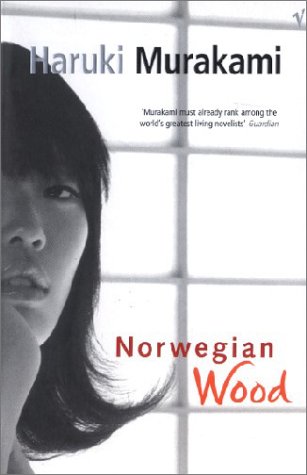
Norwegian Wood, Chapters 1-4
You'd think that, since Murakami takes 110 pages to write 4 chapters, that I wouldn't necessarily massively appreciate Norwegian Wood (I don't have the attention span to deal with long chapters. Seriously.) And if you thought that (and, let's face it, that's entirely what I thought) then HAHA you would be WRONG! Because, even though I read it seriously late last night (in spite of all my readalong excitement, I managed to sort of forget to actually read the book...) I found it difficult to stop, at 1am, at the end of chapter 4. So yeah, I sort of liked it, and I think I might be well on my way to loving it.
Interestingly, I didn't think the first chapter was really all that. Sure, there were some interesting ruminations about the nature of memory, and I wanted to learn more about Toru and Naoko's relationship, but on the whole I was sort of like 'meh...' and kind of indifferent to the whole thing. That is, until the very very interesting revelation near the end of chapter two, when we find out that Toru's best friend, and Naoko's boyfriend, killed himself a year ago; because to me, that changed everything. Everything that I was thinking about these characters was promptly blown away by knowing this one fact, and this was a genuine turning point in the book for me- I could practically feel my brain straightening up in its seat and going 'alright... well this could really be something', and, you know what, I kind of still think that it is.
And now let me talk about Midori because she's really super awesome! I don't know if it's just because I didn't really like Naoko- which, trust me, I don't feel good about because she's super grieving and all, but she seriously tires me and makes me want to sigh a lot- but Midori just seems so vibrant and amazing and different, albeit a tiny bit sociopathic. But, the thing is, she makes Toru feel alive again, I think, and generally gives him things to do and think about which, by himself, he's not so great at. Also, she has an awesome face:
Moving on... While I think there are a lot of themes and stuff explored even just in this first section of the book, the overriding one at the moment seems to basically be death, or more specifically, what death means to the people left behind. Toru has had to deal with the death of his best friend at a horribly young age, and while he misses him, what his death has also done is bring home the reality of how close death really is at any time, and also how meaningless life can seem because of this. What I think this has done is made Toru really passive- things just happen to him, rather than him doing anything to make them happen, which is not necessarily the best way to live one's life. The same goes for Naoko, only even more so, and this passivity and inability to deal with what's happened has basically, although not said in so many words, put her in a mental hospital. Sad times. And then there's Midori, whose mother has died and father has run off, and yet she remains so vibrant and alive, and so so dynamic- she makes things happen to her, and so I think we have to admire her. That's not to say that she's completely untouched by the things that have happened (she has that whole insomnia thing going on) but she carries on nonetheless, and for that I adore her.
So, already, I'm fully hooked. I want to know what's going to happen to everyone, and I really really want to know what's in that letter from Naoko! I thought that, since this is a book by a Japanese writer, set in Japan, I would feel a little bit out of my depth and overcome with strangeness, but amazingly this didn't at all happen- I think what Murakami is writing about is so universal that everyone can relate, regardless of setting. At points, in fact, I was pretty much imagining his university campus as my own University campus, something which I don't think is to do with my lack of imagination, but rather to do with the fact that I can relate, and that this could just as easily be my story. Or possibly I lack imagination. Shut up. Anyway, basically, YAY Norwegian Wood (I've been listening to that song a bit lately, and actually, it is pretty great. Naoko may be crazy, but she has pretty good taste). I can't wait for the next two chapters!
Interestingly, I didn't think the first chapter was really all that. Sure, there were some interesting ruminations about the nature of memory, and I wanted to learn more about Toru and Naoko's relationship, but on the whole I was sort of like 'meh...' and kind of indifferent to the whole thing. That is, until the very very interesting revelation near the end of chapter two, when we find out that Toru's best friend, and Naoko's boyfriend, killed himself a year ago; because to me, that changed everything. Everything that I was thinking about these characters was promptly blown away by knowing this one fact, and this was a genuine turning point in the book for me- I could practically feel my brain straightening up in its seat and going 'alright... well this could really be something', and, you know what, I kind of still think that it is.
And now let me talk about Midori because she's really super awesome! I don't know if it's just because I didn't really like Naoko- which, trust me, I don't feel good about because she's super grieving and all, but she seriously tires me and makes me want to sigh a lot- but Midori just seems so vibrant and amazing and different, albeit a tiny bit sociopathic. But, the thing is, she makes Toru feel alive again, I think, and generally gives him things to do and think about which, by himself, he's not so great at. Also, she has an awesome face:
"A fresh and physical life force surged from the girl who sat before me now. She was like a small animal that has popped into the world with the coming of spring. Her eyes moved like an independent organism with joy, laughter, anger, amazement and despair. I hadn't seen a face so vivid and expressive in ages, and I enjoyed watching it live and more."See? Midori's clearly awesome, and she can surely only get awesomer. Probably.
Moving on... While I think there are a lot of themes and stuff explored even just in this first section of the book, the overriding one at the moment seems to basically be death, or more specifically, what death means to the people left behind. Toru has had to deal with the death of his best friend at a horribly young age, and while he misses him, what his death has also done is bring home the reality of how close death really is at any time, and also how meaningless life can seem because of this. What I think this has done is made Toru really passive- things just happen to him, rather than him doing anything to make them happen, which is not necessarily the best way to live one's life. The same goes for Naoko, only even more so, and this passivity and inability to deal with what's happened has basically, although not said in so many words, put her in a mental hospital. Sad times. And then there's Midori, whose mother has died and father has run off, and yet she remains so vibrant and alive, and so so dynamic- she makes things happen to her, and so I think we have to admire her. That's not to say that she's completely untouched by the things that have happened (she has that whole insomnia thing going on) but she carries on nonetheless, and for that I adore her.
So, already, I'm fully hooked. I want to know what's going to happen to everyone, and I really really want to know what's in that letter from Naoko! I thought that, since this is a book by a Japanese writer, set in Japan, I would feel a little bit out of my depth and overcome with strangeness, but amazingly this didn't at all happen- I think what Murakami is writing about is so universal that everyone can relate, regardless of setting. At points, in fact, I was pretty much imagining his university campus as my own University campus, something which I don't think is to do with my lack of imagination, but rather to do with the fact that I can relate, and that this could just as easily be my story. Or possibly I lack imagination. Shut up. Anyway, basically, YAY Norwegian Wood (I've been listening to that song a bit lately, and actually, it is pretty great. Naoko may be crazy, but she has pretty good taste). I can't wait for the next two chapters!
Top Ten Tuesday
Well looky here! My first Top Ten Tuesday participation of 2012! (And speaking of 2012, did you guys know that the Olympics are being held in London this year? No? Well then try hearing about it on the TV every. Freaking. Day. ARGH!) So this week is about all those lazy writers who don't write enough stuff. To them, I say tsk, and to some of them I fall to my knees and BEG: Please please write some more! For the good of the WORLD! Unless you're dead, obviously, and then it's not really your fault that you've stopped. Ahem. So yes, here are the:
Top Ten Authors I Wish Would Write Another Book
1. Harper Lee- My secret dream is that Harper Lee has been writing secretly ever since To Kill A Mockingbird was published, and that there are about a zillion books, all equally fantastic as her only one, just waiting until after her death to be published. This probably isn't true. But Harper, PLEASE, we need you and your amazingness!
2. Emily Bronte- I don't care what anyone (everyone) says, Wuthering Heights is an absolute masterpiece and I wouldn't turn down another just like it. Emily did leave behind a second unpublished book, but Charlotte BURNT it- supposedly because she didn't want the critics to be mean about it, but I think out of some kind of deep seated envy over Emily's talents (although, fair play, Jane Eyre is amazing.) So, yeah. BAD Charlotte!
3. Sylvia Plath- We all love The Bell Jar, right? Some of us kind of maybe thought we were going mad the first time we read it, and then it helped certain others of us when we actually were depressed, yes? Anyway, I know there are a load of poems I could read, and I do love her short stories, but one novel from such a brain is by far not enough. Sniff.
4. Jeffrey Eugenides- I know he released a book last year, so it's not exactly fair to ask him to write another one RIGHT NOW, but in his writing lifespan, he's written precisely three books, two of which were in my top ten best books of last year. If he could just speed things up a tiny bit for the next one, that would be much appreciated.
5. Jane Austen- Six books just isn't enough. Jane, I need some more of your general amazingness, and I need it now! If I leave some paper and a pen by your grave, can I have the next one in about a year please? Ta.
6. John Steinbeck- This is a bit of a foolish choice because Steinbeck wrote quite a lot, and I haven't even read all of his work yet (I'm getting there, but there is quite a lot!) Nonetheless, I'm of the opinion that you can't have enough of a good thing, and Steinbeck is a very great writer indeed, so I wouldn't say no to some more amazing books.
7. Margaret Mitchell- As far as I know, she only wrote Gone With The Wind, and whilst that is amazing, imagine what else she could have done! She could have even written a sequel, chronicling Scarlett and Mammy's chase of Rhett through the South until she downright bullied him into re-loving her... Actually, that sounds kind of awful. It's maybe best that that didn't happen...
8. Oscar Wilde- So, according to google, Wilde only wrote one novel and everything else was all plays and poetry. Firstly, I so didn't know this, and secondly, oh man, The Picture of Dorian Gray is so amazing! And now I'm sad that there aren't any more Wilde novels (I thought I had one, but obviously that's not a novel... weird.) So yeah, more from him would be great, unlikely as that may be!
9. Arundhati Roy- Google also tells me that Arundhati Roy has only written one book, which I have read (The God of Small Things) and now I'm coveting some more Roy, probably because I can't have it. Fortunately she's still alive, so there is actually a chance with this one!
10. Donna Tartt- I loved both of her books. A lot. And, exciting stuff, while I was on Wikipedia checking that she's still alive, I found out that she actually is meant to be releasing a new novel in 2012! Can I get a woo, and then a hoo?! Aw, this feels like a happy ending to this list now!
So, yeah. If most of these authors could be reanimated just to write another novel, that would be great, and if the rest could be bullied into submission, then that would be great too! Not sure how great the zombies' writing would be, but we can probably make it work... *goes off to find a mad scientist*
Monday, 9 January 2012
Devouring Stephen King (as Richard Bachman): Thinner
Following the grand tradition of his Bachman books, Stephen King has here created a story that mainly hinges on human mistakes and weaknesses, whilst incorporating the bare minimum of supernaturalness, and it still manages to be scarier than some of his books that are out and out horror stories. Don't get me wrong, Thinner is horrifying in a lot of ways, but because it's humans doing this shit, it's so much scarier because, you know, we see humans every day! I'm not sure if I liked Thinner so much because I'd literally just finished The Talisman and was less than impressed by it, or because it genuinely was really good; but let's go with the latter because it's nicer and Thinner has an awesome ending that deserves its 'very good' title.
Very good, that is, but not the BEST EVER. Thinner is basically about this guy, Billy, who has run over this old gypsy lady before the book begins, and, being a lawyer, and friends with the Judge and all, manages to escape conviction for her death completely. Naughty Billy. So, there's this old gypsy man (who is related to the dead woman) who doesn't really think this is good enough, and lays a curse on Billy, a, shall we say, portly gentleman, using only one word: Thinner. And so, Billy begins to lose weight, even though he's eating as much as ever, which is understandably freaky and unsettling for the poor dangerous driver.
Sounds pretty good right? And it is, only there are some parts of the book where it gets a little, if not dull, then sort of subdued and non-actiony. There's this whole chapter where Billy is chasing the gypsies throughout the country, which mainly serves to show how well Stephen King knows the geography of Maine- it genuinely reads like 'and then he went here, but he was 13 days behind them, and he went here, and he was 7 days behind them', and while I get that he needed to find them, I was more or less going "FOR GOD'S SAKE, just find them already," although, I guess, as a tension building device, or at least a pissed off with boredom device, this was second to none!
I am being mean though, because on the whole, I genuinely did really like it. The ending, which I'm obviously not going to tell you about because that would ruin it completely, was so utterly awesome that I'm still not over it (and if you've read it, please, let's discuss!) and I really enjoyed the kind of underlying rage that Billy had towards his wife, since, as she played a part in causing the accident, he feels she deserves an equal measure of the punishment too. The problem with this, though, and what Billy fails to see, is that if he had just been punished adequately by legal (and non-supernatural) means, he wouldn't have gone through any of this anyway. I think King is actually very clever in this book- he makes Billy relatively unlikable so that you're not necessarily rooting for him to have the curse removed; and at times it really seems like he wants the gypsies to win- they've been on the bottom for so long, seeing injustices carried out against them every day (Billy's is an especially bad one, to be fair) and it's difficult to scold them for wanting some revenge. At the same time, though, he also makes the gypsy curser an extremely frightening figure when seen up close, so you can't entirely root for him either. It's a complex thing to be on everyone and nobody's side at the same time, but somehow Stephen King manages it. Of course he does.
So yeah, Thinner! Two thumbs up, or whatever. Don't expect to really like any of the characters though (except possibly little Linda, Billy's daughter), but just accept them as flawed, fairly unlikable people who happen to be involved in a very interesting case. I wish I could tell you more things to compel you to read it, but it's really difficult without giving away whole swathes of the plot. So, let's just say- cocaine-sniffing doctor (guess how I knew this book was written in the eighties) plus kind of whiny wife plus threats to have Billy sectioned because he's going on about gypsy curses equals my idea of a good read.
Saturday, 7 January 2012
Literary Blog Hop, January 7-10
Yay, the Literary Blog Hop! I feared that it might not be back this year after it wasn't up on The Blue Bookcase on Thursday (as is the norm) but it is, it is! Phew! Thanks, as always, to The Blue Bookcase for hosting.
So, this month's question is:
Do you like to supplement your reading with outside sources like Sparknotes, academic articles, or other bloggers reviews? Why or why not?
Well... I used to read articles that related to the books I read at University, which has possibly put me off doing so for life! I would say that, in general, after I've finished a book, I don't automatically go rushing off to find more information about it, BUT if I like it and then see someone has written a blog post about it, or see an article about it posted on twitter, then I'm pretty much guaranteed to read it. So I guess it's more of a lazy supplementing of my reading- if it's right there in front of me, I'll read it; but if I have to search for it then chances are I won't. The only exception I can think of to this is actually reading Shakespeare (which I'm doing a fair bit this month, see sidebar) because in my copy of plays there are little introductions to each of them, which I read after the play (I don't want to spoil it!) but which have been helping me understand stuff better. This is such a rare occurrence for me though- I rarely read even introductions to books I love, probably from some aversion to learning stuff, and if not that then because I'm lazy. It's probably just that, actually...
How about you? Are you all smart and wanting to learn things, or are you a bit of a lazybones like me?
Friday, 6 January 2012
Buffy, Je T'Adore
Who can tell if I'm using french correctly there? Not me, obviously, and I don't really care- you all see the word adore up there, so you get it, right? I LOVE BUFFY THE VAMPIRE SLAYER, and I don't care who knows it! I realise that, by writing about Buffy now, I basically sound like I'm about 9 years behind the times (well, 9 years behind the end of the series, really, I guess its time started way earlier than that), but when have I ever been one to keep on top with whatever is popular now? (Case in point- I reviewed about 2 books last year that were actually released last year. Yeah.) And, anyway, I already realised how great it was like 4 years ago, I just didn't have a blog way back then to tell everyone about it! Much as it got me through a rough patch that time, I turned to Buffy again when I found myself unemployed (again) in September last year, and by the end of November, I'd watched all 7 seasons. What can I say? I'm a glutton for Buffy.
Here's the thing though: I'm not really a huge fan of sci-fi, really in any form. Obviously I love Stephen King (I know, he's really horror, not sci-fi, but I think the two genres do overlap) but other than that, on the whole, I tend to stay away from the whole monster-y, supernatural-y realm (unless, say, they're using supernatural beings for social commentary, a la True Blood. That's just fine). Buffy is a completely different matter, and I think there's a very good reason for that. Joss Whedon, series creator and all round genius, said in one of the season recaps on my DVDs (yes, I watch the special features, I am a Buffy nerd) that he doesn't know anything really about science, or how any of the supernatural aspects of the show would actually work, but what he does know, is people. And really, that's something which is so evident on the show, even to the most casual observer- Buffy showcases characters that are incredibly human, sometimes even when they aren't, and relationships that remain believable and are never sugar-coated. It is the characters that make Buffy the programme it is, and that make even the most hardened sci-fi sceptics warm up to the show.
I also think that, as part of this, there is the perfect balance of action and talking in the programme, which means that you never get bored of either, and never get bogged down in either the kick-punch-kick, OR the talk of monsters and stuff. It's an incredible feat, and an incredible TV show, even if it's not wholly a perfect one. Because, and I don't think I could really talk about Buffy without mentioning these two little thorns in my side, Riley and Dawn, both major characters, are really too annoying for words. I can forgive the show partially for introducing them, because I can see what they were trying to do with each character (namely, with Dawn, teaching Buffy a greater responsibility than even saving the whole world; with Riley, bringing up the issue of whether she could be happy with just a regular, and even slightly annoying, guy [short answer: no]) but I also almost can't forgive them for Dawn's introduction especially, because she devalues everything that happened in the series before- we have to adjust our thinking to understand that, in the gang's memories, many of the things that happened also involved Dawn, which is really just too annoying for words!
Nonetheless, Buffy still manages to be awesome, and one of my favourite things about it is the way that it's completely unafraid to make fun of itself, and just generally have fun with the genre it's a part of. This can just be in the form of a vague description of something, or something like, for example, in Season 7, a time when Buffy makes A LOT of inspirational speeches, she quips, "Yesterday I gave an inspirational speech to the toaster." I love this because it makes it clear that, even while you're thinking something is a bit naff (the speeches get just a tad... oh, I don't know, boring after a while) the writers have already noticed it themselves and are fully prepared to mock it just a little bit. In other words, the writers are my (our) people!
Since, you know, I'm me, I couldn't exactly write this glowing recommendation of Buffy without talking about feminism (this is also true of my daily life, basically). But not just because I'm me, but also because Buffy is pretty much the most empowering programme in the history of TV. Here you have this tiny blonde girl, traditionally seen as weak and the easiest to kill in say horror movies and scary TV shows and EVERYTHING EVER; and yet Buffy is stronger than anyone or anything else. She's the most formidable force in the whole show, and the power part of empowering certainly applies to the show. And the strong woman thing doesn't stop with her. Willow is incredibly powerful, both because of her considerable intellect, which is so useful in the early seasons, and then as a fully fledged witch, who quite literally saves the day at the end of the series. There are so many villians that either are women (Glory, for example, who I would argue is the strongest of all the big bads) or who wouldn't be able to exist without women (Spike, in season 2 for instance, or the Mayor in season 3, whose plan hinges very strongly on Faith, another slayer). In the Buffy, then, Whedon has created a universe where women hold most, if not all, of the power and the strength. How cool is that?!
So do I watch Buffy because of its patriachy-smashing nature, and because of its deeply imbedded understanding of people? Not really- I watch it because its wholly entertaining, engaging and consistently well-written television. All the other stuff is just icing on the cake of a phenomenon that deserves to be remembered, revered, and re-affirmed every single day by Buffy-lovers just like me (note the defence of being waaaay behind the times, again). For all its vampires, monsters, Gods and nerds, Buffy is the most human of programmes, and that's when it's at its best. If you are, or were, a Buffy worshipper, then I guess you'll probably know what I'm talking about, and if not then why not?! Is there something wrong with you? Did you never get the opportunity to watch it? Whatever your answer, I wholly recommend acquiring a boxset any way you can, sitting down for about 2 weeks, and just watching the whole thing. I guarantee you'll get more than you bargained for, plus, you know, you'll make me all happy and stuff. Good enough?
While I was looking for some nice pictures to go with this post, I came across this, so I'm now considering moving to DC since this is clearly the coolest place EVER. Also on the internet: many, many Buffy tumblrs that I want to marry. Guess I'm not as behind the times as I thought! Also, the Buffy love from people who are younger than me? Heart=warmed.
Subscribe to:
Posts (Atom)